Add “Visit a Human Library” to your bucket list.
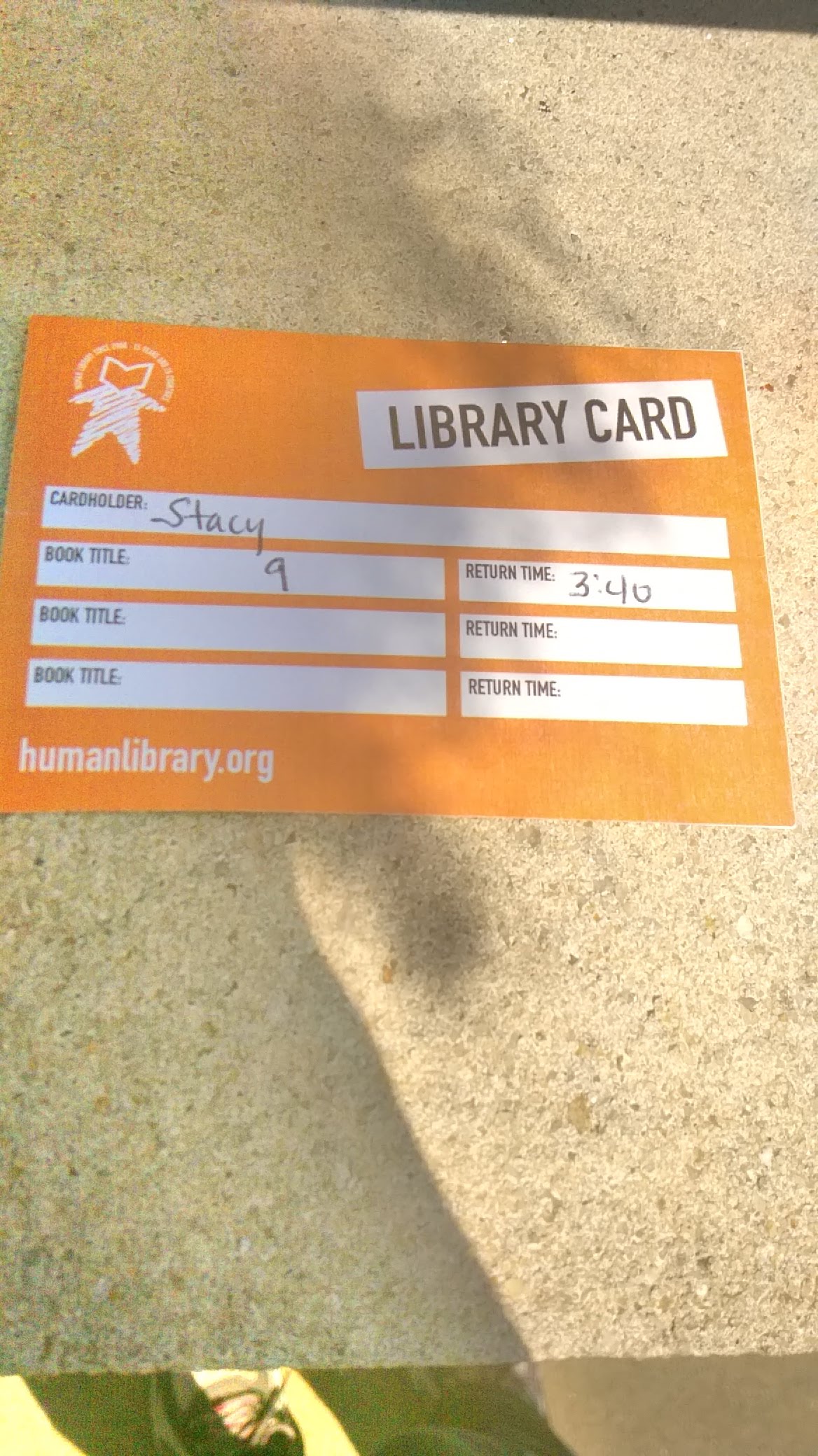
On Sunday, I finally got the chance to attend a Human Library event. This is one of those gatherings where you “check out” a human Book (i.e. a person) and have a conversation. The main guidelines are to be respectful, (the Book can walk away from the exchange if they start to feel uncomfortable), to not record the Book, and to not ask the Book for personal contact information. To date, Human Libraries have been hosted in more than 70 countries.
The idea started with a group of Danish anti-violence activists who wanted to promote dialogue among people from different backgrounds. The idea is that if you get people talking about their prejudices and stereotypes they will understand one another better and be less likely to resort to violence to settle their differences. The first Human Library event took place in 2000 at the Roskilde Festival, an annual music-and-arts event billed by its organizers as “a week-long celebration of togetherness and community” (Roskilde Festival, n.d.). The success of that first event led to the creation of the Human Library Organization, which provides guidelines for people wanting to host human libraries in various parts of the world.
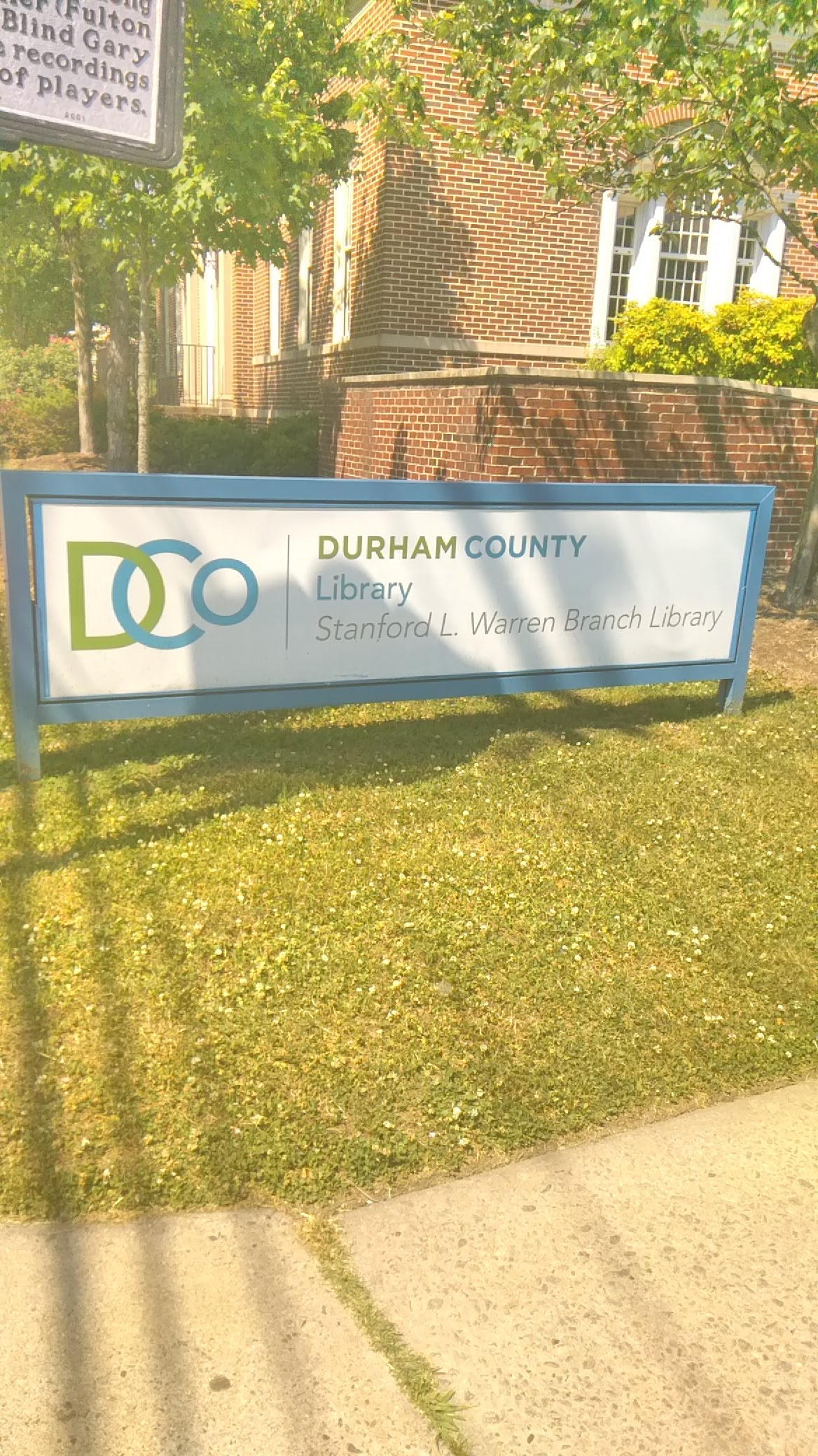
The event I attended on Sunday took place at the Stanford L. Warren Branch Library in Durham, North Carolina. According to the Durham County library system’s website, educator Tom Nevels was motivated to organize the first Human Library in Durham in 2017 in response to the Pulse nightclub shooting in Orlando, Florida (Durham County Library, 2017). He told me that Sunday’s Human Library event was the fifth one to take place at a Durham County public library.
Book topics included sexuality, health, and disabilities. Each Book had a numbered table and a seat where the Reader could sit across from the Book and ask questions.
I was struck to see Readers standing in line for a Book loan. (I actually had to get on a waiting list for my Book.) It gives me hope to know that there are people who will stand and wait for a chance to talk to someone who might make them uncomfortable and challenge their beliefs.
Out of respect for my Book’s privacy, I must keep the details of our conversation private, but I will say that I learned a tremendous amount during our relatively short encounter and cannot wait to organize a Human Library event myself. Sitting across from someone who knew nothing about me and yet was willing to talk to me about aspects of their life which were absolutely none of my business was moving and deeply humbling. It gave me something to aspire to as a human being. I do not know if I could have done what they did in that moment as fearlessly as they seemed to do it. People take a big risk in opening up to complete strangers when they have no idea how those strangers might respond, especially in these uncertain times.
The Human Library experience reminded me of how revolutionary the acts of talking and listening can be. So much change in the world begins with a simple conversation: in a living room, in a club, on a porch, in a store, at a march, on the sidewalk, and, yes, even in the library. But that change can only happen when people are willing to be vulnerable.
Think. When was the last time you were vulnerable, really vulnerable, face to face, with someone you did not know well? If you can’t remember when that last time was, ask yourself what holds you back. In my case, fear of sounding ignorant or having my feelings hurt often keeps me quiet. Pushing past that is hard, but I know that I have to push past it to help create a more compassionate world and keep moving forward in my life.
Brazilian educator Paulo Freire once said that “reading is a matter of studying reality that is alive, reality that we are living inside of, reality as history being made and also making us” (p. 18). Each of us is creating reality daily through what we perceive and say, as well as through what we do not perceive and do not say. I am glad my Book took the time to speak to me and that I, the Reader, had the good sense to sit still and listen.
Related links
The Human Library Organization
The organization’s Facebook page includes a list of upcoming Human Library events around the world.
References
Durham County Library. (2017, September 7). Durham County Library presents Human Library: Durham. Retrieved from https://durhamcountylibrary.org/2017/09/durham-county-library-presents-human-library-durham/
Freire, P. (1985). Reading the World and Reading the Word: An Interview with Paulo Freire. Language Arts, 62(1), 15-21. Retrieved from http://www.jstor.org.alumniproxy.lib.duke.edu/stable/41405241
“Roskilde Festival is eight days of music, activism, arts, camps, and freedom.” (n.d.). Retrieved from https://www.roskilde-festival.dk/en/
 Stacy Torian