Information literacy strategies of incarcerated women
Last month, I recorded a podcast on the information literacy strategies of incarcerated women. I was looking forward to sharing it with my blog readers, but I recently learned that publishing it online would require institutional review board approval from my school. Unfortunately, there is not enough time for me to obtain that approval prior to graduation. Although I cannot post the program, I can share some of what I learned during my research.
First, a little background. Decades ago, I worked as a records checker for a prosecutor’s office. In that role, I ran some long rap sheets and would often see the same names come up from one month to the next. One day, an upbeat, smiling person came in and asked to speak with an assistant prosecutor. They told me their name, which I immediately recognized from having run their record several times before. As they explained their situation and why they needed to see the prosecutor, I thought “Wow, this person is so nice.” The more they spoke, the more it struck me how friendly and warm this person was. I remembered the individual’s extensive record and wondered how their life had taken the turn that it had. That encounter made me question what I had heard and assumed about people who end up “in trouble with the law.” Learning about incarcerated women’s reading and information literacy practices made me question everything even more.
Statistics on Incarcerated Women
I began my research by looking for all the data I could find on incarcerated women. The statistics below illustrate the extent and some potential consequences of female incarceration in the U.S.
- According to the Prison Policy Initiative, 219,000 women are incarcerated in the United States. That is roughly 10% of the U.S. incarcerated population.
- There are eight times more women incarcerated in the U.S. today than in 1980 (“Incarcerated women and girls,” 2018).
- Sixty-two percent of women serving time in prison are mothers of children under the age of 18 (Sawyer, 2018). This statistic made me think about the impact of female incarceration on the well-being and literacy of youth, since mothers are often their kids’ primary caretakers and first reading teachers.
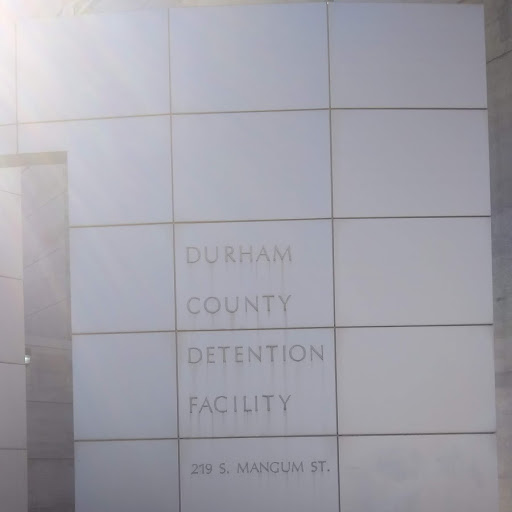
- About 40% of incarcerated women are in jails (Kajstura, 2018). It can be tougher to access reading materials in jail than in a prison, since many jails do not have libraries and instead rely on local public library staff to supply reading materials.
Reading behind bars
In Prisoner’s Right to Read: An Interpretation of the Library Bill of Rights, the American Library Association “asserts a compelling public interest in the preservation of intellectual freedom for individuals of any age held in jails, prisons, detention facilities, juvenile facilities, immigration facilities, prison work camps, and segregated units within any facility, whether public or private.” For many jail and prison librarians, putting this principle into practice is a struggle. Book banning is common in carceral institutions, although restrictions vary from facility to facility.
Despite access barriers, many incarcerated women read regularly. In her 2012 book The Story Within Us: Women Prisoners Reflect on Reading, professor and former social worker Megan Sweeney compiled life narratives of eleven women prisoners. One woman, who goes by the pseudonym “Mildred” in the book, reads John Grisham novels to improve her understanding of the legal system and to learn how to write better letters. Another, who calls herself “Sissy,” talked about researching legal matters for fellow prisoners and wanting to one day write a book about how to make healthy life choices.
Even though incarcerated women are less likely than nonincarcerated women to have their GEDs or high school diplomas (Alfred & Chlup, 2009), the 2003 National Assessment of Adult Literacy (the latest version of the report available, as far as I can tell) revealed that incarcerated people with GEDs read more than the nonincarerated (as cited in Sweeney, 2012, p. 7).

Making Their Voices Heard
Women in some jails and prisons have been allowed to write and produce their own publications. In her article, “‘The Devil’s Bargain’: Censorship, Identity and the Promise of Empowerment in a Prison Newspaper,” professor Eleanor Novek wrote about her experience teaching journalism to incarcerated women in the northeastern United States. Despite numerous restrictions (according to Novek, inmates were forbidden to write about domestic violence or prison healthcare and had limited access to library facilities), the women managed to publish a newspaper in which they shared their perspectives on prison policy, self-betterment, and freedom of expression.
Feminist scholar Tobi Jacobi facilitates writing workshops for incarcerated women and other community members in Fort Collins, Colorado. Participants experiment with various literary forms and provide feedback on each other’s work. Selections from their writings are published in the journal SpeakOut! and distributed locally.

One of the longest-running prison publications I came across is produced by the California Coalition for Women Prisoners (CCWP), an Oakland-based advocacy group made up of incarcerated women, formerly incarcerated women, and their allies. Since 1996, the CCWP has published a newsletter called The Fire Inside. The newsletter, whose readership includes women prisoners and the general public, documents changes to the California penal code and highlights organized protests by prisoners. It also features stories often unheard in the mainstream media, such as accounts of women’s experiences in the prison healthcare system, as well as incarcerated women’s poems and essays.

The journals, newspapers, and newsletters produced by incarcerated women exemplify two key principles of the Association of College and Research Libraries Framework for Information Literacy for Higher Education: “Information Creation as Process” and “Authority is Constructed and Contextual” (“Framework for Information Literacy,” 2015). Through their media, incarcerated women develop research and writing skills, assume an authoritative perspective on incarceration, and claim their own spot in the publishing landscape.
Incarcerated Women as Teachers
Midway through my research, I read an article by Patrick Bell Alexander in which he touched on the topic of teaching by incarcerated women. In that piece, he wrote about renowned philosopher Angela Davis taking a college class into a San Francisco jail and allowing the incarcerated women to teach the college students. Near the end, I interviewed a formerly incarcerated woman who spoke of the rewarding experience she had working as an English tutor at a prison school. This classroom application of the “Authority is Constructed and Contextual” principle challenges traditional images of teachers, acknowledges the capabilities of incarcerated women, and can create a transformative educational space for everyone involved.

I can say personally that every incarcerated or formerly incarcerated woman whose story I read or heard was a teacher to me. I learned so much from them that I felt my own literacy increase as I was doing my research. The most fundamental lesson came from Sweeney’s interviewee “Sissy” who stated:
“[L]ife goes on regardless of where you’re at, whether you’re locked up, you know. Anything that happens in prison, the same thing happens in society, except that we’re a closed community. That’s the only difference” (Sweeney, 2012, p. 43-44).
The first paragraph of this blog post was edited on January 3, 2020.
Related Links
California Coalition for Women Prisoners
Framework for Information Literacy for Higher Education
Prisoner’s Right to Read: An Interpretation of the Library Bill of Rights
Like what you read? If so, tell others about it via social media, through email, or by word of mouth.
References
Alexander, P. (2017). Education as liberation: African American literature and abolition pedagogy in the sunbelt prison classroom. South: A Scholarly Journal, 50(1), 9-21.
Alfred, M., & Chlup, D. (2009). Neoliberalism, illiteracy, and poverty: Framing the rise in black women’s incarceration. Western Journal of Black Studies, 33(4), 240-249.
“Framework for Information Literacy for Higher Education.” (February 9, 2015). American Library Association, Chicago, IL.. Retrieved from http://www.ala.org/acrl/standards/ilframework Document ID: b910a6c4-6c8a-0d44-7dbc-a5dcbd509e3f
“Incarcerated women and girls.” (2018, May 10). The Sentencing Project, Washington, DC. Retrieved from https://www.sentencingproject.org/publications/incarcerated-women-and-girls/
Kajstura, A. (2018, November 13). Women’s mass incarceration: The whole pie 2018. Prison Policy Initiative, Northampton, MA. Retrieved from https://www.prisonpolicy.org/reports/pie2018women.html
Novek, E. (2005). ‘The devil’s bargain’: Censorship, identity and the promise of empowerment in a prison newspaper. Journalism, 6(1), 5–23. https://doi.org/10.1177/1464884905048950
Sawyer, W. (2018, January 9). The gender divide: Tracking women’s state prison growth. Prison Policy Initiative, Northampton, MA. Retrieved from https://www.prisonpolicy.org/reports/women_overtime.html
Sweeney, M. (2012). The story within us : Women prisoners reflect on reading. Urbana: University of Illinois Press.
Van den Bergh, B.J., Gatherer, A., Fraser, A., & Moller, L. (2011). Imprisonment and women’s health: Concerns about gender sensitivity, human rights and public health. Bulletin of the World Health Organization, 89(9), 689-94. doi:10.2471/BLT.10.082842
Copyright © 2019 by Stacy Torian. All rights reserved.
 Stacy Torian